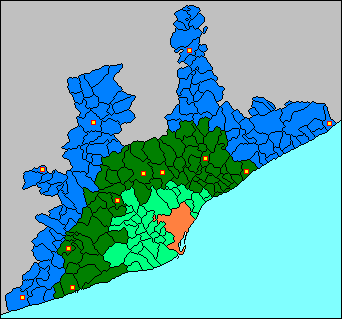
TV3 is reporting that of the 700,000 people eligible to vote in today’s referendum/consultations, 200,000 voted. If that number is correct, the turnout stands at just under 30%.
What does this mean for Catalonia? There are several points to take into consideration (which affect any interpretation of events in various ways):
- The consultations were non-official and therefore certainly not taken as seriously as an official referendum would be. This means that the approx. 30% who did take part probably come from more politicised parts of Catalan society. I suspect that pro-independence elements will have voted more strongly (based on the fact that only the pro-independence movements seemed to be drumming up any support for the ballots). The other 70% of the population would likely include far more anti-independence voters than today’s result will indicate.
- The consultations were carried out in largely rural towns and villages, which traditionally demonstrate a much stronger level of support for Catalan independence. Barcelona and its suburbs, along with Tarragona and environs have large numbers of voters, including many with a more Spain-centric (and sometimes right-wing nationalist) point of view than will likely be seen in today’s results.
- The consultations seemed to go without mention at all on TVE 1 this morning. For an official referendum, we can imagine that their coverage would have been different.
- The consultations allowed votes from anyone over 16 and registered in the municipality concerned. An official referendum would likely follow Spanish/European electoral law and limit the electorate to Spanish citizens aged over 18. I’ll add that I’d like it if 16-18 year olds, and non-Spanish citizens were allowed to vote in elections. But they’re not.
- The consultations have happened at a time when general support for Spanish PM Zapatero is very low (as was possibly intended). A PM from the Partido Popular would likely increase the pro-independence vote. A more popular Zapatero (or alternative) might well reduce it.
It remains to be seen what effect these consultations in the form of a referendum will have on Catalonia’s political future. My bet is that whatever the result, ERC, CUP and the CdC will claim it as a vote in favour for an official referendum within the next two or three years.
Barcelona, if it ever manages to hold a similar consultation, will always be the decider.